

Coworking space for remote and distributed teams
A distributed team does not need a workplace. It needs one place where the people who are in the same city can sit together, and a reliable way for everyone else to be in the room when it matters.
For distributed teams · Published
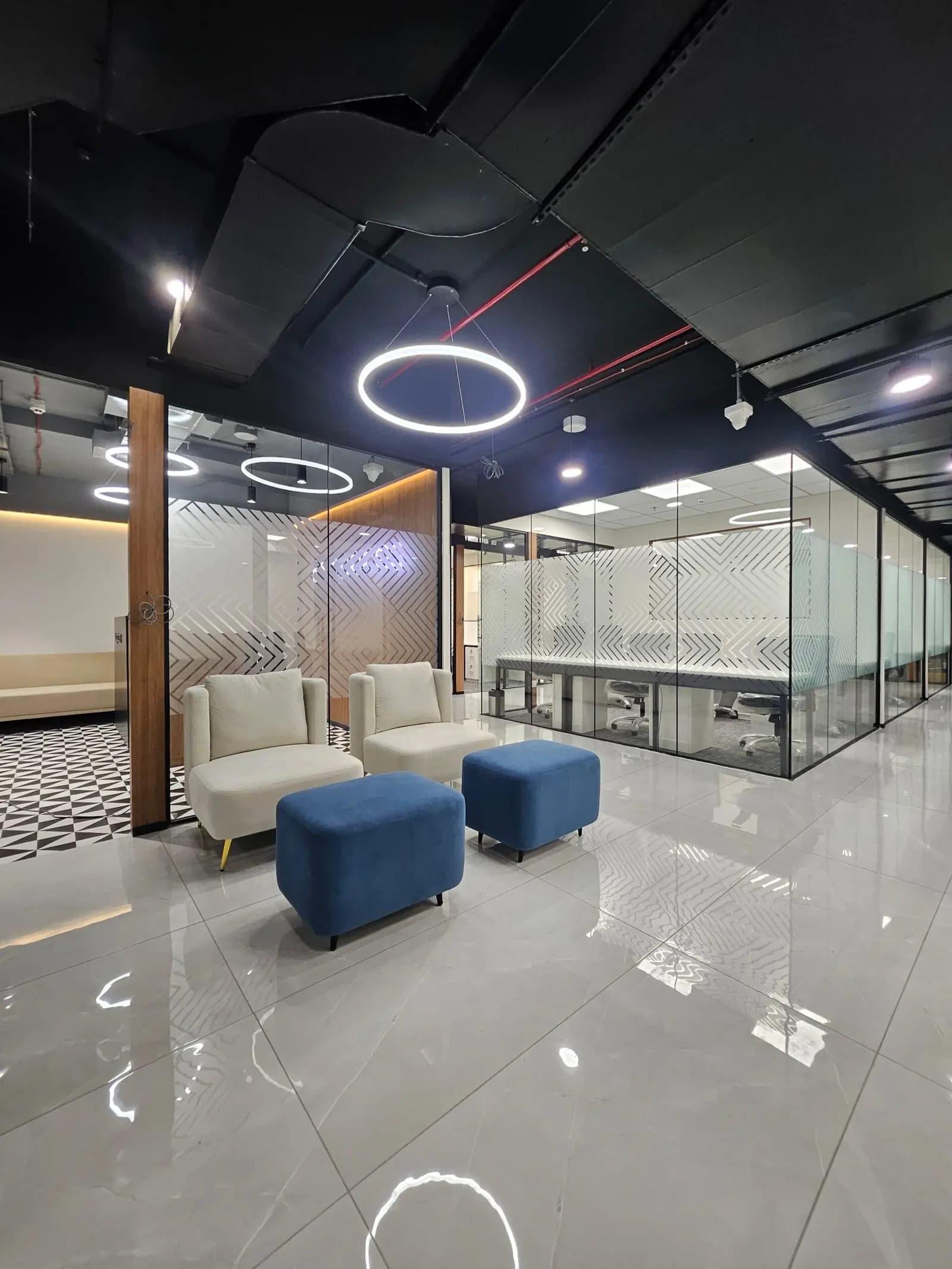
The anchor office, not the headquarters
The failure mode for a distributed team is that everyone works alone and the company loses its shared context. The fix is not to bring everyone back to one city. It is to give each cluster a room that is genuinely theirs, and to have everyone pass through the same hub occasionally.
That is what a coworking space is for in this model: a desk that is yours on the days you want it, a cabin for the team in that city, and meeting rooms that hold a call with people three time zones away.
What the anchor office needs to have
Because the hub is where the cluster works rather than where the company sits, the requirements are specific and they are not the same as a corporate lease.
- Meeting rooms that can take a hybrid call with a screen, a camera and a room that does not echo.
- Cabins, so a call can be taken without the open floor hearing it.
- Desks that can be held by name, so nobody arrives to find their colleague's desk taken.
- A location one team can all reach, rather than one head office can reach.
- An address that works for contracts and registration.
The same setup in every city
When part of the team moves, the thing that breaks is not the desk but the process: a different internet arrangement, a different way of booking a room, a different way of getting a letter posted. IA Spaces runs 40+ hubs across 25+ cities, so a team that moves can keep the same workspace arrangement rather than starting again.
That is worth asking about explicitly: whether the same arrangement is available in the new city, and what it takes to move.
When a full office makes more sense
A distributed team should consider a conventional office when it has grown past the point where a cluster needs more than a cabin or two, when it needs a physical presence for compliance or a client relationship, or when the cost of the hub stops being cheaper than a small lease on the cluster's own city.
None of those is a reason not to start with a hub. They are reasons to move to one deliberately.
Questions
Is a coworking space useful for a fully remote team?
Yes, as an anchor office rather than a headquarters. The team in each city gets a desk and a cabin they can rely on, the company keeps one way of working across cities, and people have somewhere to sit when a call or a workshop needs a room.
Can a remote team hold meetings at an IA Spaces hub?
Yes. Meeting rooms are booked by the hour and can be used for client calls, internal reviews and hybrid meetings with people in other cities. Tell the team what you need and they will confirm the room and the price.
What happens when part of a remote team moves city?
That is the question worth asking before you commit. IA Spaces operates hubs in multiple cities, so ask whether the same arrangement is available in the new city and what it takes to move a desk and a cabin there.
Do distributed teams get a business address?
A virtual office with a business address is a separate arrangement from the workspace. Ask the team about it when you enquire and they will explain what is available.