
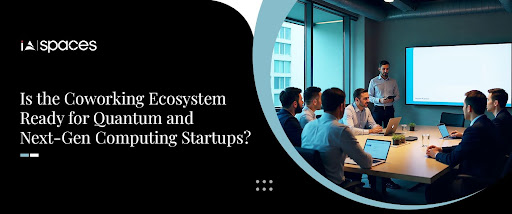
The next wave of computing will not be built in isolation. Technologies like AI and quantum computing are rapidly entering the industries and proving to be a turning point. As the market steps forward, the way teams work is also being redefined. This shift is placing new expectations on the modern coworking space, which is increasingly hosting technology-driven teams rather than just traditional office users.
Now the main question arises for the coworking businesses: Are their spaces ready to keep up with the rise of quantum and next-generation computing startups?
Flexible Work Is the New Normal
Coworking is no longer limited to freelancers and early-stage entrepreneurs. Industry data suggests that more than 40% of technology-driven teams now operate from flexible or hybrid work environments.
For quantum and next-generation computing startups, flexibility is essential, but so is reliability. A modern coworking space must support collaborative research, frequent experimentation, and evolving team structures. This evolution is pushing the coworking business beyond basic office services toward technology-enabled work environments designed for innovation-led teams.
Why Ordinary Office Infrastructure No Longer Works
Teams working on quantum simulations, AI models, and advanced computing architectures consume significantly more bandwidth than traditional software teams. In many cases, data and cloud usage can be three to five times higher.
To remain relevant, a modern coworking space must offer:
- High-speed, low-latency internet, which is capable of supporting cloud-based quantum platforms.
- Power redundancy to ensure uninterrupted workflows.
- Dedicated spaces and mentor support for helping the business grow.
For the coworking business, infrastructure quality is becoming a core differentiator rather than an added amenity.
Security is Redefining Trust in Coworking Spaces
Quantum and next-generation computing startups work with highly sensitive intellectual property. Ecosystem surveys indicate that deep tech ecosystems indicate that over 70% of founders consider data security and IP protection critical when choosing a workspace.
This requires coworking spaces to rethink open-access models. A future-ready modern coworking space must include:
- Secure and segmented networks.
- Controlled access to private offices and meeting rooms.
- Compliance-friendly policies for research and enterprise collaboration.
Spaces that combine openness with strong security standards will earn greater trust from advanced technology teams.
Innovation Accelerates Through Community
Breakthroughs in quantum and next-generation computing rarely happen in isolation. Studies show that cross-disciplinary teams can innovate up to two times faster than siloed groups.
One of the strongest advantages of a modern coworking space is its ability to bring diverse talent under one roof. By curating a community of researchers, founders, investors, enterprise leaders, and academic collaborators, coworking spaces can act as active innovation hubs, not just real estate providers.
For the coworking business, this means investing in meaningful programming, such as deep tech roundtables, demo sessions, and research-driven discussions, rather than generic networking events.
Scaling Deeptech Is Different
Unlike traditional SaaS companies, quantum and next-generation computing startups scale in stages. Estimates suggest that close to 60% of advanced technology startups require flexible expansion options as teams grow around funding milestones, research progress, and pilot deployments.
Coworking spaces that support this growth journey can offer:
- Seamless team expansion without long-term lock-ins
- Access to enterprise and investor networks
- An ecosystem that supports both experimentation and commercialization
This positions the coworking offices as a long-term partner in innovation rather than a short-term space provider.
The Road Ahead
Coworking spaces are not expected to house quantum hardware or specialized computing labs. However, they can, and must, support the people, workflows, and collaborations driving next-generation computing forward.
A modern coworking space in 2026 will be defined by performance-ready infrastructure, strong security, curated communities, and flexible growth support. For the coworking business, adapting to these needs is not optional; it is essential for staying relevant in an era where technology is redefining how, where, and why teams work.
This is the direction modern coworking spaces, such as IA Spaces, are preparing for.