

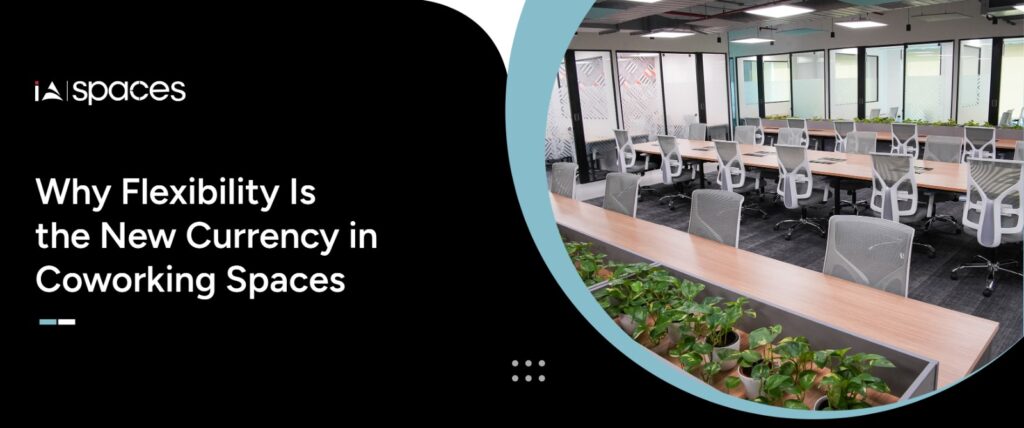
Imagine signing up for an office the same way you sign up for a streaming service, upgrading when you need more, downgrading when you don’t, and canceling without penalties. That’s exactly how people now expect workspaces to function.
As work becomes less predictable, offices are no longer judged by permanence. They’re judged by how quickly they can adapt. This is where coworking spaces have revolutionized the landscape. Built around flexible workspaces, they offer something traditional offices never could: freedom without compromise.
The coworking and flexible workspace market has moved far beyond a fringe option. Globally, there are roughly 42,000 coworking spaces with an estimated 5.5–6 million users as of 2025, and this number is expected to continue rising in the coming years. This reflects the deepening adoption of flexible solutions by hybrid teams and enterprises alike.
What’s the problem with fixed office culture?
Most businesses don’t grow in straight lines. Teams expand, contract, and sometimes pivot entirely. Yet traditional offices still expect companies to commit years in advance.
Coworking spaces remove this pressure. Instead of forcing businesses to plan for an uncertain future, they allow teams to respond in real time. That’s why flexible workspaces are becoming the default choice, not because they’re trendy, but because they make practical sense.
Why Flexibility Feels More Valuable Than Space
Square footage is used to define an office’s worth. Today, the value looks very different.
In coworking spaces, flexibility shows up as shorter commitments, scalable seating, and ready-to-use infrastructure. Businesses don’t pay for what they might need someday; they pay for what they need right now. This shift has turned flexibility into a kind of currency, one that saves time, reduces risk, and keeps teams focused on work rather than logistics.
In India specifically, coworking operators leased a record 125 lakh square feet of premium office space in 2024, marking a 44% year‑on‑year increase in demand for flexible workspaces.
Rise of Flexible Office
Another major change is where people want to work. Central business districts are no longer the only priority. Professionals now actively search for flexible office space near me, prioritizing convenience, accessibility, and work-life balance.
Coworking spaces are responding by expanding into multiple city pockets, making it easier for people to work closer to home without sacrificing professionalism or amenities.
In recent years, India’s flexible office space has accounted for a growing share of total commercial leasing, at one point representing about 15% of all new office leasing activity in 2024, signaling that flexible solutions are rapidly becoming mainstream rather than an alternative.
Managed Office Spaces: Structure Without Rigidity
Some teams need privacy, branding, and dedicated spaces but still want flexibility. That’s where managed office spaces within coworking environments come in.
These spaces offer the structure of a traditional office with the agility of coworking. Businesses get their own setup, while the coworking operator handles everything else, from maintenance to services, allowing teams to stay focused on growth.
Why Coworking Spaces Fit the Way We Work Today
Coworking spaces align with how modern work actually happens: hybrid schedules, changing team sizes, and constant experimentation. They don’t demand certainty; they support change.
This is why flexibility has become the defining factor in coworking spaces. It gives businesses room to move, adapt, and evolve without friction.
What the Future Looks Like
Coworking spaces aren’t just responding to change; they’re shaping what work looks like next. As flexibility continues to outweigh permanence, these spaces will remain central to how businesses think about offices.
In the end, flexibility isn’t just a benefit. In coworking spaces, it’s the real value people pay for and the reason they keep coming back.
The Road Ahead
Work will continue to evolve, often in ways businesses can’t fully predict. In this environment, workspaces that offer flexibility will naturally hold more relevance than those built around permanence. Coworking spaces reflect this shift by prioritizing adaptability over long-term rigidity.
FAQs
Why are coworking spaces becoming more popular than traditional offices?
Coworking spaces offer flexibility. Businesses can upgrade, downgrade, or cancel without long-term lock-ins.
How do flexible workspaces benefit growing or changing teams?
Teams rarely grow in straight lines. Flexible workspaces allow businesses to scale seating, shorten commitments, and adjust in real time.
What type of work benefits most from a private cabin in Gurgaon?
Work that requires deep focus, confidential discussions, strategic planning, or uninterrupted execution benefits significantly from a private cabin. It creates the controlled environment needed for clarity and high-quality decision-making.
What are managed office spaces within coworking environments?
Managed offices provide private, branded setups inside coworking spaces. Businesses get dedicated space with full services handled by the operator, combining structure with flexibility.
Why is flexibility considered more valuable than space today?
Modern work is hybrid, unpredictable, and dynamic. Flexibility reduces financial risk, saves time, and removes long-term pressure. Businesses value adaptability more than square footage because it supports growth without friction.